
Falconry360 connects obligations, risks, controls, policies, processes, assets, third parties, evidence, testing, issues, actions and assurance so teams work from the same governed records.
Obligations, risks, controls, evidence and assurance stay connected.
Reuse common controls and evidence where appropriate.
Understand what a requirement or policy change affects.
A mature library governs how records relate, where they apply, who owns them, how they change and how evidence and assurance are reused across the enterprise.
Source, jurisdiction, legal entity, business scope, owner, review status and mapped requirements.
Taxonomy, inherent and residual exposure, scenarios, treatments, KRIs and linked processes, services or assets.
Design, objective, owner, frequency, applicability, evidence requirements, testing method and effectiveness.
Evidence period, source, reviewer, test result, exceptions, remediation and assurance history.
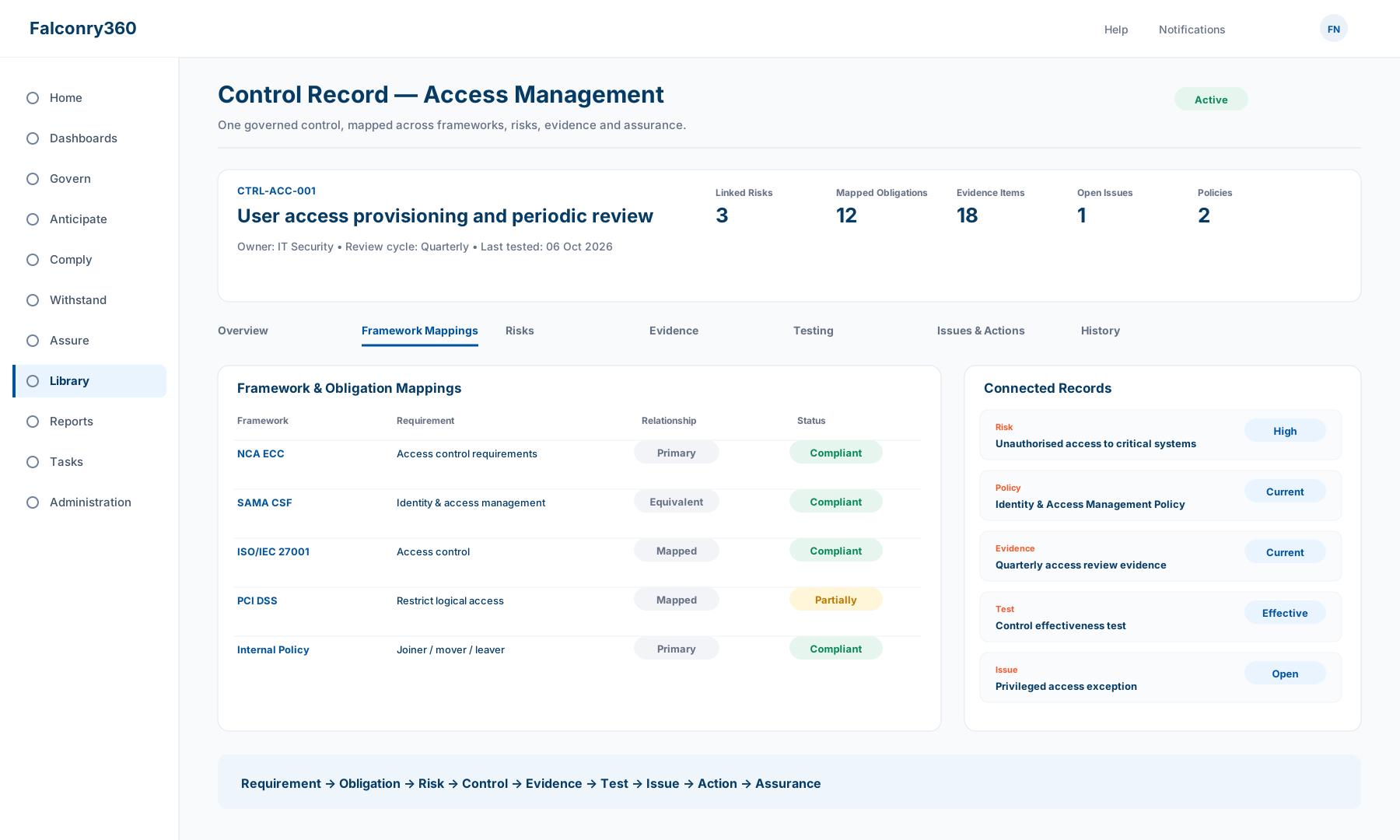
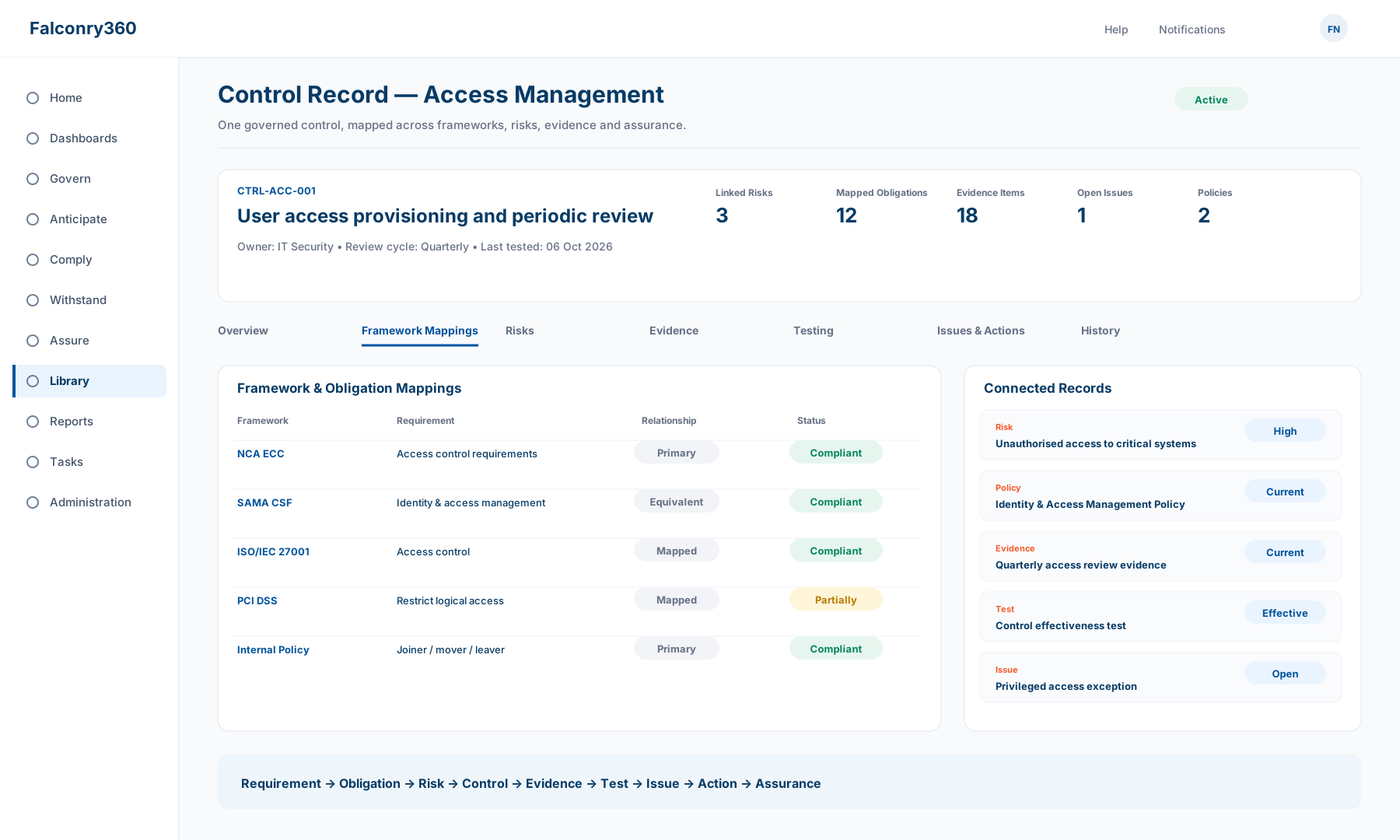
A single control can support multiple obligations and internal requirements while preserving local scope, exceptions, compensating controls, testing history and accountable ownership.
Determine applicability by jurisdiction, entity, product, process, service, asset or third party.
Connect exposure to the controls intended to prevent, detect, respond or recover.
Define what proves operation, how often it is reviewed and how effectiveness is assessed.
Carry deficiencies into remediation, closure testing, audit and assurance without breaking traceability.
Enterprise records can be inherited across entities or business units while local applicability and exceptions remain visible.
Shared controls can support multiple processes or frameworks without copying the same control record repeatedly.
Alternative treatments are documented with rationale, approval, evidence and residual exposure.
Effective dates, review cadence, ownership, version history and retirement status are governed.
Evidence requirements define source, period, reviewer and expected refresh rather than relying on ad-hoc attachments.
A changed obligation can be traced to affected controls, policies, processes, evidence and responsible owners.
A regulator changes an access-control requirement. Falconry360 can identify the affected obligation, mapped controls and policies, entities in scope, existing evidence, open exceptions and owners who need to respond—without rebuilding the analysis in separate registers.
© 2026 Falconry360. All rights reserved.
Falconry360 is operated by Falconry Ltd and its affiliates, as applicable.